Mastering the Buying Committee: How Sales Org Charts and Stakeholder Mapping Drive More Wins
In today’s B2B sales landscape, winning a deal rarely hinges on convincing a single decision-maker. Instead, understanding and influencing the intricate buying committee is the key to sales success. Leveraging a sales org chart and applying effective stakeholder mapping help your sales team navigate this complex process and close more deals.
What is a Buying Committee?
A buying committee is a group of stakeholders from an organization who collectively assess and approve major purchasing decisions. Instead of a single point of contact, modern enterprises involve various roles, such as:
- Decision-makers
- Influencers
- End users
- Gatekeepers
- Technical evaluators
Each member has unique priorities and concerns, making it essential for your sales approach to be flexible and comprehensive.
Why Buying Committees Matter in B2B Sales
Outdated sales tactics aimed at a single “decision maker” no longer suffice. Gartner research shows the average B2B purchase now involves between 6 and 10 stakeholders. This complexity increases with the size and strategic importance of the purchase.
Failing to engage the whole buying committee can result in lost deals—even if your main contact champions your solution. That’s why mapping the structure and influence of each stakeholder is crucial.
The Role of a Sales Org Chart
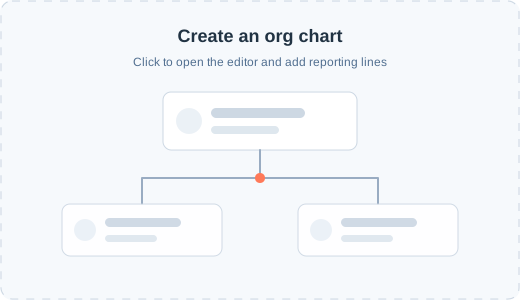
A sales org chart is a visual representation of the buying organization, revealing key individuals, reporting lines, and informal networks. Here’s how a sales org chart empowers sales professionals:
- Uncover Decision Dynamics: Identify the budget holder, technical adviser, potential blockers, and executive sponsor.
- Prioritize Outreach: Target the most influential contacts and not just the most visible ones.
- Personalize Messaging: Adapt sales collateral for each stakeholder’s unique needs and authority level.
- Track Progress: Visualize engagement across the committee, ensuring no critical stakeholder is left out.
How to Build an Effective Sales Org Chart
- Leverage Discovery Conversations: Ask smart questions during calls and meetings to uncover team structures.
- Utilize LinkedIn and CRM Data: Research titles, roles, and past group interactions.
- Update Consistently: Keep your org chart dynamic to reflect promotions, new hires, or changes in responsibility.
Stakeholder Mapping: Going Beyond Names and Titles
While a sales org chart shows hierarchy, stakeholder mapping analyzes:
- Stakeholder influence and authority
- Level of support or resistance to your solution
- Communication preferences and pain points
Steps to Effective Stakeholder Mapping
- List All Stakeholders: Include not just your main contact but also legal, procurement, IT, operations, and end-users.
- Assess Influence and Attitude: Use frameworks like a power-interest grid to categorize stakeholders (e.g., Champions vs. Blockers).
- Tailor Engagement: Develop targeted strategies for neutralizing skeptics and empowering internal advocates.
Actionable Tips for Sales Teams
- Document Early and Often: Don’t wait until late in the sales process to build your org chart and stakeholder map.
- Collaborate With Customer Success and Marketing: Share insights to align messaging and implementation strategies.
- Leverage Technology: Use CRM plugins or specialized tools for org chart and stakeholder management.
Conclusion: The Competitive Advantage of Stakeholder Intelligence
Winning complex B2B sales is less about the perfect pitch and more about strategic relationship management. By combining detailed sales org charts with dynamic stakeholder mapping, your team can confidently navigate the buying committee, overcome obstacles, and accelerate deal velocity.
Master the modern buying committee—turn every relationship into a potential win.
Ready to up your B2B sales game? Start building your sales org chart and stakeholder map today!