How Org Charts Power Success in MEDDICC and Enterprise Sales
In the world of enterprise sales, teams often turn to frameworks like MEDDICC to win big deals. But one underrated tool can supercharge your sales process: org charts. Understanding how org charts fit within MEDDICC can make the difference between a lost opportunity and a closed deal.
What is MEDDICC?
MEDDICC is a qualification framework for complex, high-value sales. It stands for:
- Metrics
- Economic Buyer
- Decision Criteria
- Decision Process
- Identify Pain
- Champion
- Competition
This framework helps sales reps qualify opportunities, understand deals deeply, and close enterprise sales efficiently.
Why Are Org Charts Essential in Enterprise Sales?
Enterprise sales are rarely made to a single buyer. Instead, they involve long sales cycles, multiple stakeholders, and complex decision webs. That’s where org charts come in.
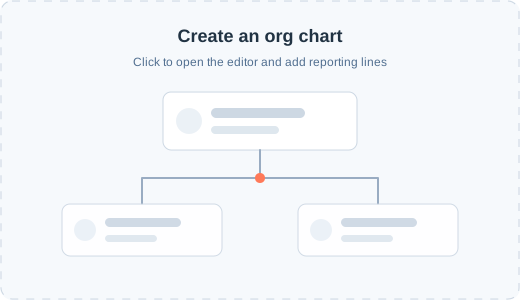
Org charts visually map out an organization’s structure: who reports to whom, and how different teams are interconnected. For enterprise sales teams, org charts are strategic blueprints that help:
- Pinpoint key decision-makers
- Discover hidden influencers
- Understand reporting lines
- Navigate internal politics
- Align sales messaging with each stakeholder’s goals
Integrating Org Charts in the MEDDICC Process
Let’s break down how org charts support each part of the MEDDICC framework in the context of enterprise sales:
1. Economic Buyer
Goal: Identify the person with the authority to sign off on the purchase.
Org charts help you quickly locate the true Economic Buyer among dozens of executives.
2. Decision Criteria & Decision Process
Goal: Uncover what drives the purchasing decision and how it will be made.
Understanding the org structure clarifies the internal approval chain and the influence of various stakeholders in the decision process.
3. Identify Pain & Champion
Goal: Find who feels the problem most and who will advocate for your solution.
Org charts reveal potential champions buried deeper in the org, not just those with the highest titles. Mapping internal influencers is key to building consensus.
4. Metrics & Competition
Goal: Quantify your value and understand competitor positioning.
With org charts, you can tailor metric-driven business cases to specific business units and identify departments where your competitors may have advocates.
Best Practices For Using Org Charts In Enterprise Sales
To leverage org charts within the MEDDICC framework:
- Research deeply: Use LinkedIn, company sites, and network connections to build a detailed org chart.
- Update continuously: Org structures shift often—stay current.
- Map buying centers: Highlight champions, decision makers, and blockers directly in your chart.
- Share with your team: Sales is a team sport; make sure everyone has the latest map.
Final Thoughts
In high-stakes enterprise sales leveraging org charts within the MEDDICC framework leads to a more strategic, informed, and effective approach. Org charts provide a roadmap to stakeholder alignment, faster decision making, and, ultimately, more closed-won deals.
If you’re aiming to master enterprise sales with MEDDICC, don’t overlook the power of org charts—they might just be your secret weapon.
Want more insights on MEDDICC, org charts, or enterprise sales?
Subscribe to our newsletter and never miss a strategy update!